17 times Black athletes took a stand, from Muhammad Ali to Naomi Osaka to Colin Kaepernick



As Azeez Al-Shaair continues honoring Palestinian children despite NFL fines, he joins a long history of Black athletes who took a stand.
Azeez Al-Shaair isn’t backing down, no matter the cost.
On Sunday, Sept. 20, the 29-year-old Houston Texans linebacker took the field against the Cincinnati Bengals with the name “Wafaa Akila” written on his eye black, honoring an 8-year-old Palestinian girl who was killed alongside her father in an Israeli strike in Gaza earlier this month.
It was the second week in a row Al-Shaair, a practicing Muslim, used his eye black to honor a Palestinian child killed in Gaza. Just days earlier, the NFL fined him $11,941 for wearing the name “Hind Rajab,” honoring the 5-year-old Palestinian girl killed with members of her family in 2024. The league prohibits players from displaying unauthorized messages on their uniforms or equipment.
“It’s bigger to me. Is a life worth $11,000? I think it’s priceless,” Al-Shaair told reporters last week.
This isn’t his first time challenging the status quo either. In January, the NFL fined the player $11,593 for wearing “Stop the Genocide” on his eye black during a playoff game. He attempted to wear the message again the next week, but officials warned him he would be pulled from the game if he kept it on.
While Al-Shaair may be the latest Black athlete willing to face consequences for taking a stand, he certainly isn’t the first. For generations, Black athletes have used their platforms to protest everything from segregation and apartheid to war, racism and police violence, often with money, titles and even their careers on the line. Here are 16 additional instances where Black athletes made it clear that some things were bigger than the game.
Elgin Baylor refused to play in a segregated city in 1959
In 1959, legendary pro basketball player Elgin Baylor was still a rookie with the Minneapolis Lakers (where the team originated) when he refused to play a game in Charleston, West Virginia, after he and two of his Black teammates were denied hotel rooms because of their race. The team relocated to another hotel, but Baylor still chose to sit out the Jan. 16 game against the Cincinnati Royals anyway. He would later explain that if he wasn’t going to be treated like a human being, he wasn’t going to perform there either.
Bill Russell and other Black NBA players sat out a game in 1961
During an October 1961 preseason trip to Lexington, Kentucky, two of Bill Russell’s Celtics teammates, Sam Jones and Satch Sanders, were refused service at the team hotel’s coffee shop because they were Black. Rather than play their exhibition game that night, Russell and the Celtics’ other Black players left town. Two Black players from the opposing St. Louis Hawks joined them, making the Oct. 17 game one of the earliest organized protests against segregation by NBA players.
Muhammad Ali refused to join the Army in 1967
Muhammad Ali was already a star heavyweight champion when, in 1967, he famously refused to join the U.S. Army during the Vietnam War, citing his religious beliefs. It was a decision that ended up costing him dearly. After refusing on April 28, he was convicted of draft evasion, stripped of his heavyweight title and barred from boxing for more than three years during the prime of his career. His conviction was eventually overturned by the U.S. Supreme Court in 1971.
Tommie Smith and John Carlos raised their fists at the 1968 Olympics
At the 1968 Olympics in Mexico City, track stars Tommie Smith and John Carlos famously bowed their heads and raised black-gloved fists in a Black Power salute during the national anthem after winning gold and bronze in the 200-meter race. Their protest against racial injustice included other symbols as well, including the black socks they wore without shoes to represent poverty. Both men were suspended from the U.S. Olympic team and expelled from the Olympic Village for the demonstration, which has since become one of the most enduring images in sports history.
Arthur Ashe challenged apartheid in 1973
After years of being denied a visa to compete in apartheid South Africa, Arthur Ashe was finally allowed into the country in 1973 to play in the South African Open. However, Ashe came with conditions. Among them, he pushed for the tournament’s spectator seating to be integrated and that November he became the first Black man to compete in the tournament and would continue using his platform to oppose apartheid for years.
Lloyd Honeyghan gave up a world title over apartheid in 1986
Across the pond, in 1986, British Jamaican boxer Lloyd Honeyghan was willing to give up a championship belt rather than compromise his stance against apartheid. The fighter relinquished his WBA welterweight title that December rather than potentially defend it against white South African challenger Harold Volbrecht. Honeyghan said fighting him while apartheid remained in place would amount to condoning it.
Craig Hodges brought an eight-page letter to the White House in 1991
When Craig Hodges and the Chicago Bulls visited the White House to celebrate their NBA championship in October 1991, Hodges showed up in a dashiki and with an eight-page letter for President George H.W. Bush. He handed the letter directly to the president, which detailed serious concerns about racism and conditions facing Black Americans. Hodges played his final NBA season in 1991-92 and later sued the league in 1996, alleging teams had blackballed him over his activism. The NBA disputed the claim.
Mahmoud Abdul-Rauf refused to stand for the national anthem in 1996
Before taking a knee during the national anthem became a thing, Denver Nuggets guard Mahmoud Abdul-Rauf stopped standing for it during the 1995-96 NBA season. Abdul-Rauf, who is Muslim, said standing conflicted with his religious beliefs and described the American flag as a symbol of oppression. When his protest gained attention in March 1996, the NBA suspended him without pay. He missed one game before reaching an agreement with the league that allowed him to stand and pray during the anthem.
Venus and Serena Williams boycotted Indian Wells after 2001
For more than a decade, you could count on seeing Venus and Serena Williams at nearly every major tennis event except Indian Wells. That’s because after the 2001 tournament, when Venus withdrew from a semifinal against Serena because of an injury, the family faced a hostile crowd including racial slurs during Serena’s March 17 final. Serena stayed away for 14 years before returning in 2015 while Venus stayed away until 2016.
LeBron James, Dwyane Wade and the Miami Heat put on hoodies for Trayvon Martin in 2012
As outrage grew over the 2012 killing of Trayvon Martin, the Miami Heat famously joined the calls for justice. On March 23, LeBron James posted a photo of himself, Dwyane Wade and their teammates wearing hoodies with their heads bowed in honor of the 17-year-old, who had been shot and killed the month before. James captioned the image with hashtags including #WeAreTrayvonMartin and #WeWantJustice.
Los Angeles Clippers players protested their own owner in 2014
In the middle of the 2014 NBA playoffs, Los Angeles Clippers players found themselves playing for an owner who had just been recorded making racist comments. Ahead of their April 27 game against the Golden State Warriors, the players removed their warmup jackets and left them at center court, then warmed up in shirts turned inside out so the Clippers logo could not be seen. The NBA banned owner Donald Sterling for life and fined him $2.5 million two days later.
WNBA players kept protesting after the league fined them in 2016
In July 2016, players from the New York Liberty, Indiana Fever, and Phoenix Mercury started wearing black warmup shirts as their own form of protest against police brutality and in support of the Black Lives Matter movement. The WNBA responded on July 21 by fining the teams $5,000 each and participating players $500 for violating its uniform policy. The players continued speaking out, and two days later, the league rescinded the fines.
Colin Kaepernick took a knee in 2016
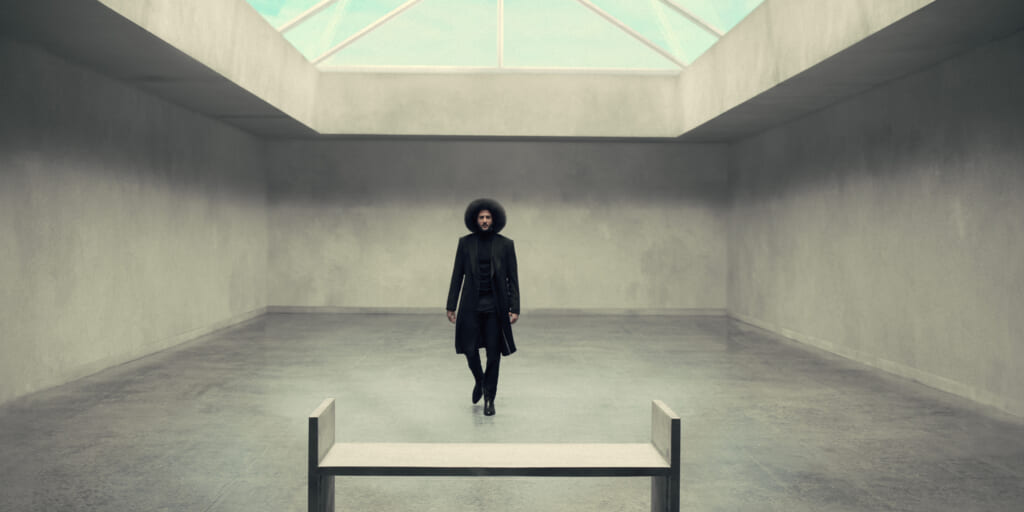
By now, most people know the image of Colin Kaepernick kneeling during the national anthem. What actually began in August 2016 with Kaepernick sitting during the anthem evolved into taking a knee after he spoke with former NFL player and Green Beret Nate Boyer about his protest against racism and police brutality. Kaepernick and teammate Eric Reid first knelt on Sept. 1. He played his final season with the San Francisco 49ers that year, became a free agent in March 2017 and never played in the NFL again.
Kaepernick later alleged the league’s owners colluded to keep him out, a grievance that ended in a confidential settlement in 2019.
LeBron James turned “shut up and dribble” into something else entirely in 2018
In February 2018, LeBron James and Kevin Durant were discussing racism, politics, and then-President Donald Trump when Fox News host Laura Ingraham responded by telling the NBA stars to “shut up and dribble.” James, of course, did not. He doubled down, responding with #WeWillNotShutUpAndDribble and, by that November, “Shut Up and Dribble” was the name of a Showtime documentary series he executive produced about athletes using their voices beyond sports.
Naomi Osaka wore seven names at the 2020 U.S. Open
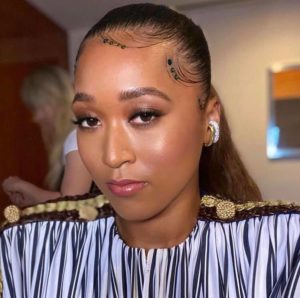
Naomi Osaka, ever the one to make a fashion statement, showed up to the 2020 U.S. Open with seven masks, each with the name of a Black person whose death had become part of the ongoing national reckoning around police brutality and racism that year. Beginning Aug. 31, Osaka wore a different mask for each of her seven matches, honoring Breonna Taylor, Elijah McClain, Ahmaud Arbery, Trayvon Martin, George Floyd, Philando Castile and Tamir Rice.
The Milwaukee Bucks refused to play in 2020
On Aug. 26, 2020, the Orlando Magic came out to warm up for Game 5 of their playoff series against the Milwaukee Bucks when the Bucks never did. Three days after police shot Jacob Blake in Kenosha, Wisconsin, the Bucks remained in their locker room and refused to play. All three NBA playoff games scheduled that day were postponed, and players across the WNBA and teams in MLB and MLS also sat out games.



Responses